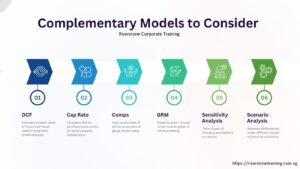
Investment banking modeling is designed to provide the investment banker with the tools necessary to understand financial statements, do financial forecasts, value a company, and create a transaction model for mergers, acquisitions, and capital raises. Using structured financial modeling in Excel, learners gain real-world valuation practice and become deal-ready with real-world case studies based on transactions.
What Is Financial Modeling in Investment Banking?
Financial Modeling in Investment Banking is the process of creating a structured, formula-based model of a company’s financial statements for analysis, prediction of performance, and estimation of value. They are also used by analysts to assist in live transactions, such as mergers and acquisitions, IPOs, and debt or equity raises, where accuracy means the difference between a successful or unsuccessful deal. A normal model connects the income statement, balance sheet, and cash flow statement together so that an assumption change cascades through the whole file.
Unlike academic models, investment banking models are designed to be robust enough to be subjected to the scrutiny of senior bankers, clients, and regulators, and structure and auditability are as important as the output. While we find it quite obvious, financial modeling for investment banking training teaches the skill directly through templates and conventions that match what financial analysts are doing in a week of work.
Why Is Financial Modeling Essential for Investment Bankers?
An investment banker’s job relies heavily on the financial model since almost all deliverables, including a pitch book or a fairness opinion, are based on a financial model. Models are used by bankers to dimension a transaction, test financing structures, and demonstrate to clients how a transaction will impact earnings, leverage, and value. If an analyst is not equipped with reliable modelling abilities, he or she cannot stand up for the analytical backbone in client work.
Competence in the modeling process also contributes to the ability to quickly answer sudden requests, often seen in the real deal arena. Having a banker who can keep up with a model with speed and accuracy in such a fast-paced situation is beneficial in both the timing of the deal and to the banker’s credibility with the client.
What Financial Statement Analysis Skills Do Learners Develop?
Learners can read and interrogate the income statement, balance sheet, and cash flow statement and come to an understanding of how a company can make profit – and how it generates cash. This involves all of the above as well as recognizing non-recurring items, comprehending movements in working capital, and reconciling net income to free cash flow. This is a set of skills that will keep the model from being based on a misunderstanding of the business.
Usually, real or realistic filings are taken to address common types of adjustments analysts make every day, like normalizing earnings before tax, interest, depreciation, and amortization, or EBITDA, for one-time charges. This is a basic level of fluency at the statement level that will be used for each subsequent modeling step.
Investment Banking Modeling Skills
| Skill | Workplace Application |
| Financial Statement Analysis | Evaluate company performance |
| Forecasting | Project future financial results |
| Valuation | Estimate company value |
| Excel Modeling | Build transaction models |
| Sensitivity Analysis | Test assumptions under different scenarios |
How Does Forecasting Support Investment Decisions?
Forecasting can help aid the investment decision by converting the past financial results into a defensible expectation of future company earnings and cash flows. The forecast is a logical response to changes in assumptions, and revenue and cost drivers are integrated into the model. This forward-looking projection has a direct impact on valuation and financing.
Good forecasting also demands the ability to relate operational inputs, such as unit volume or prices, to financial results – that is, how the business actually performs. Financial modeling courses teach students how to create these driver-based forecasts instead of using straight-line growth forecasting.
How Do Valuation Models Help Investment Banking Professionals?
Valuation models are essential tools for investment bankers to help them solve the fundamental question in any deal: “What is this business worth? Analysts develop these models to give pricing recommendations, fairness opinions, and negotiating positions, and convert financial projections into a defensible range of value. A solid valuation model demonstrates to clients and counterparties the rationale for the price rather than the price itself.
The outputs of a valuation are not always just a number, and experts provide a range of values derived from several methods, necessitating more than one modeling technique. This is why financial modeling for investment banking training covers several valuation techniques rather than teaching just one in isolation.
Why Are DCF and Comparable Company Analysis Important?
The reason for doing a DCF and other types of company analysis is that they take a different perspective on valuation, and combining both makes the valuation more defensible. A discounted cash flow model is based on the company’s expected cash flows and is used to estimate intrinsic value, whereas a comparable company analysis uses the market’s valuation as a benchmark to determine the value of the company. Using a single approach can lead to either a theoretical or a market-specific valuation.
In reality, bankers put both in a valuation summary, generally displayed in the shape of a football field graph. It’s a fundamental problem in most financial modeling courses to learn how to construct and balance these methods.
Valuation Methods Comparison
| Method | Primary Use |
| DCF Analysis | Intrinsic valuation |
| Comparable Companies | Market valuation |
| Precedent Transactions | Acquisition pricing |
| LBO Analysis | Private equity investments |
How Does Excel Improve Financial Modeling Accuracy?
By providing a structured environment to connect assumptions, formulas, and outputs, Excel can help analysts enhance the accuracy of financial modeling by ensuring that one change in an input element cascades throughout the formula. If the Excel model is constructed properly, it will lessen the chances of manual error when calculating and help to trace the derivation of a number. When a model is looked at by senior bankers or shared with clients, the ability to trace back is very important.
There are also conventions in investment banking when using Excel, including using consistent formatting, avoiding numbers in formulas, and creating clean and auditable worksheets. Financial modeling training drills these conventions over and over, because the worst thing an analyst can do during a live deal is to get the formatting wrong.
How Do Financial Models Support Mergers and Acquisitions?
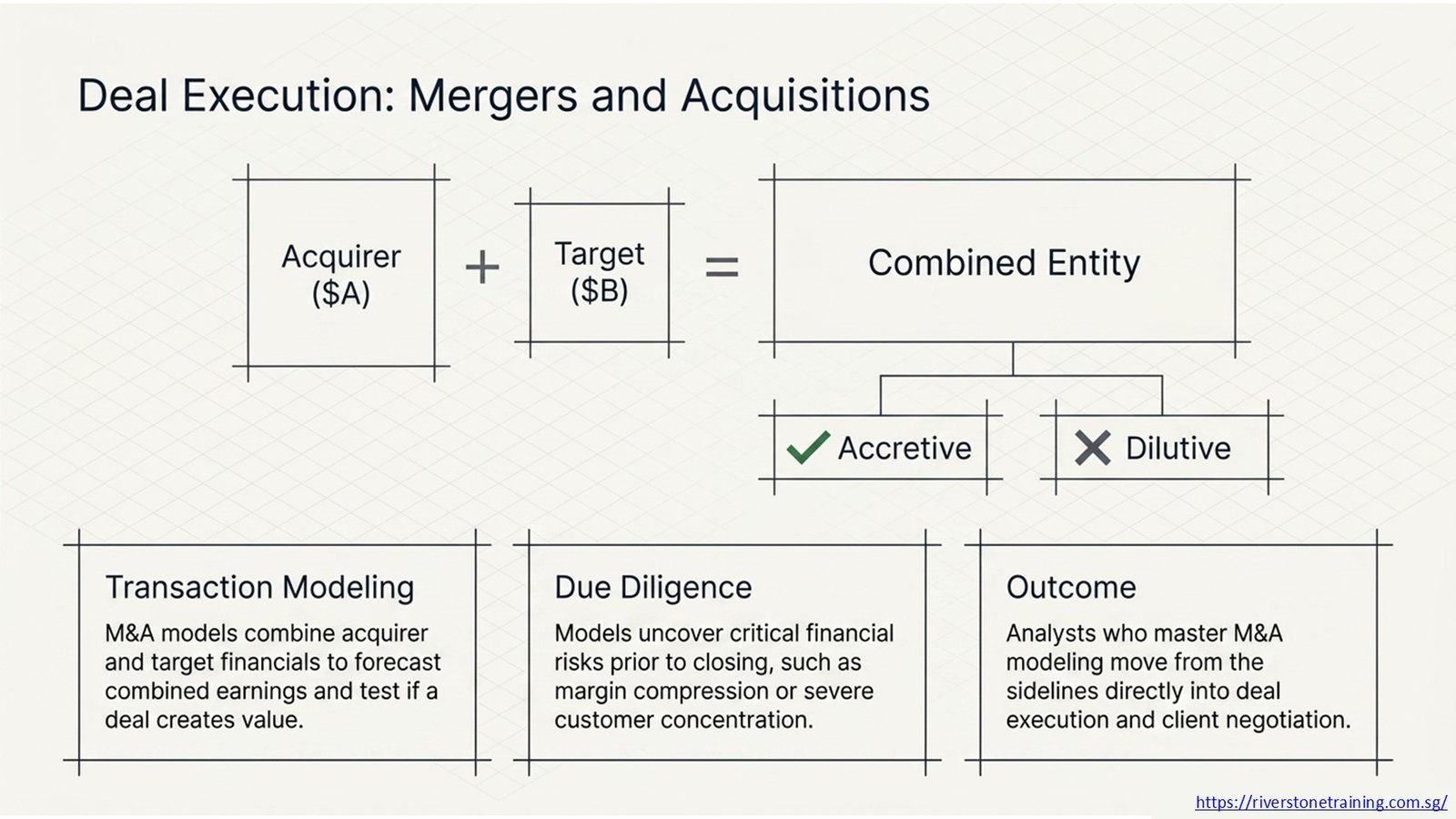
Financial models are used in the mergers and acquisitions process to determine if a proposed transaction will generate value and the structure and financing of the transaction. An M&A model is a financial model that can be used to combine the financials of the acquirer and target to forecast the combined earnings and to determine whether the combined entity is accretive or dilutive and how much the acquired firm is worth. This analysis is directly applicable to the pitch and negotiation of the deal.
Models also help with due diligence by identifying potential target company financial risks prior to closing, including margins or customer concentration. Analysts who can develop and analyze the M&A models become involved in the execution of the deals instead of analyzing on the sidelines.
What Role Does Scenario and Sensitivity Analysis Play?
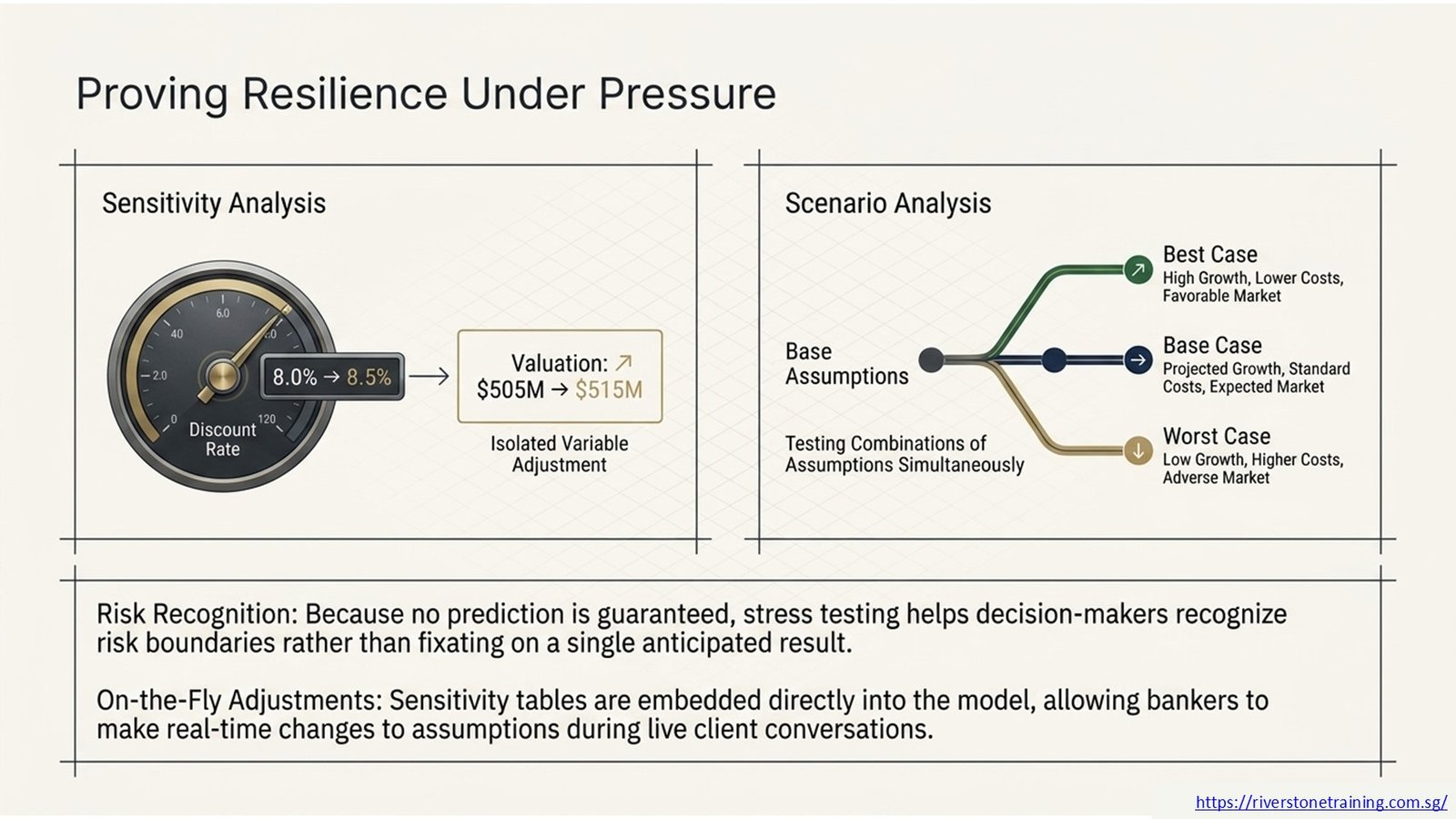
Because no prediction is guaranteed, scenario and sensitivity analysis is important as it demonstrates the effects of alternative assumptions on the model’s outputs. Sensitivity analysis assesses the impact of varying one individual assumption, such as revenue growth, discount rate, etc., while scenario analysis tests valuation based on combinations of assumptions in both best-case and worst-case scenarios. This assists decision-makers in recognizing risk, rather than just one anticipated result.
In deal work, sensitivity tables are often embedded in the model itself, allowing banks to make on-the-fly changes to certain assumptions when speaking with the client. These are skills that are taught in a financial modelling course and are very useful to learn how to construct them efficiently.
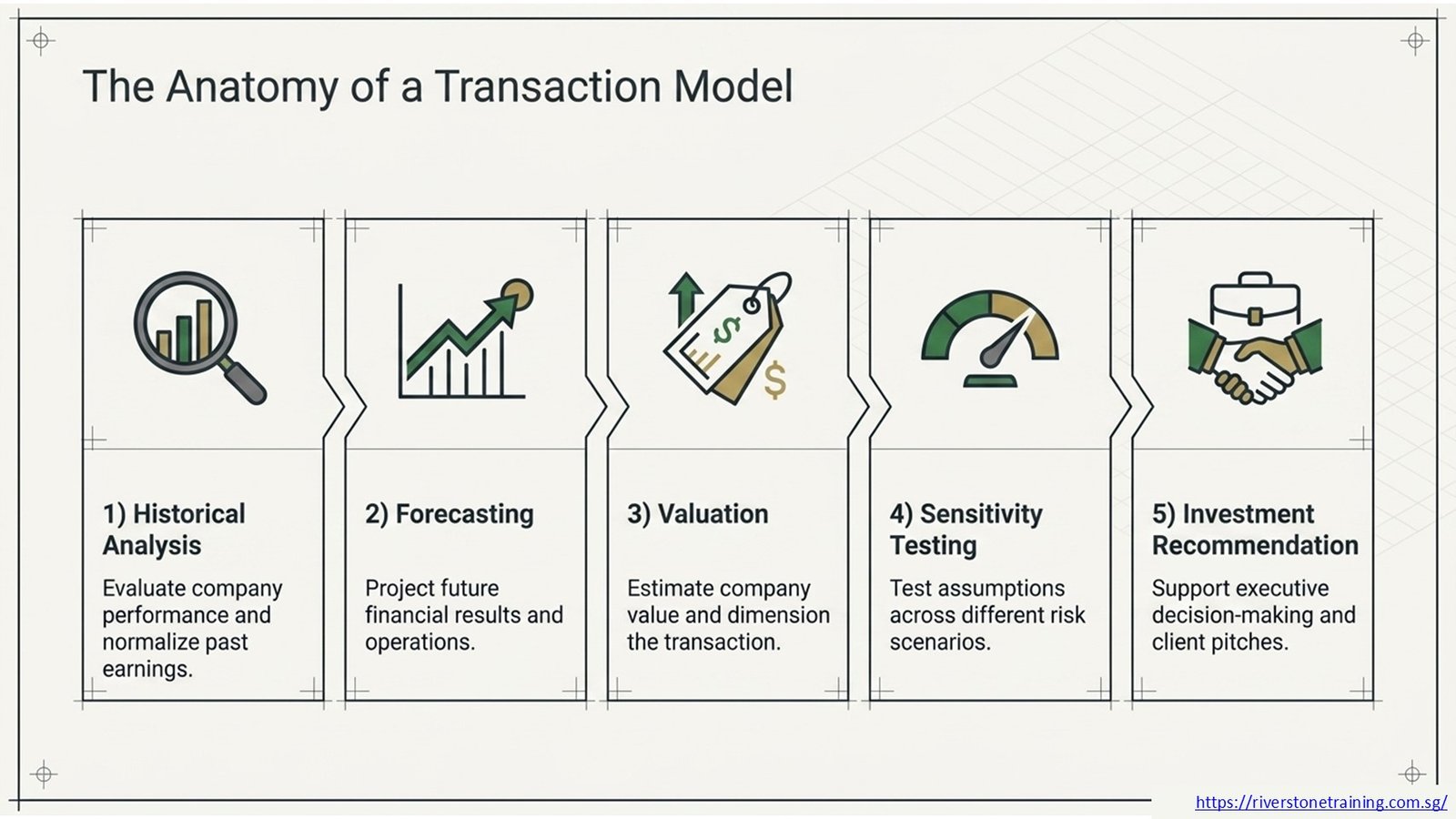
Financial Modeling Workflow
| Step | Purpose |
| Historical Analysis | Understand company performance |
| Forecasting | Project future operations |
| Valuation | Estimate business value |
| Sensitivity Testing | Assess risk across assumptions |
| Investment Recommendation | Support decision-making |
How Does Financial Modeling Improve Client Advisory Skills?
Financial modeling enhances the ability of the client adviser to provide analytical support to a recommendation and not on a general market opinion. A banker working with a client considering a sale might employ a model to demonstrate how a number of offers compare once the financing is factored in. This makes advisory conversations fact-based, numeracy-informed.
Good modeling skills also enable the banker to be able to answer the client’s questions as they arise and know exactly how the output from the model was obtained, rather than having to consult with another person. This responsiveness helps to create trust among clients and strengthens a banker’s credibility on a deal team.
How Does Financial Modeling Prepare Professionals for Private Equity?
Financial modeling is a course designed to prepare professionals for the private equity position by creating a foundation in the acquisition analysis, leveraged buyout, and investment evaluation skills needed daily in private equity positions. Financial modeling for private equity extends core investment banking modeling into areas such as debt structuring, returns analysis, and exit scenario planning, which are central to how private equity firms evaluate deals. LBO analysts are able to switch between investment banking and private equity more easily when they are familiar with the mechanics of LBOs.
This overlap is one of the reasons why many investment banking analysts switch careers to private equity, because the modeling skills are also applicable. Financial modeling for private equity is based on the same forecasting and valuation principles that are applied in investment banking, with the inclusion of leverage and returns analysis unique to buyout deals.
What Career Opportunities Benefit from Financial Modeling Skills?
Financial modeling positions in which knowledge of financial modeling is helpful include investment banking, private equity and venture capital, equity research, corporate finance, and valuation advisory. These positions all share the same core skills for creating, analyzing, and articulating a financial model, albeit in varying ways. This is one of the most transferable tech skills in finance.
When pursuing finance roles, such as becoming a financial analyst or a career change, the skills of financial modeling, which can be demonstrated through a portfolio of case studies, are as important as previous roles. Basic structured financial modelling training provides candidates with a solid exercise to refer to during interviews and technical evaluations.
Career Pathways Supported by Financial Modeling
| Career | Modeling Application |
| Investment Banking Analyst | M&A and capital raising |
| Private Equity Analyst | Acquisition analysis |
| Equity Research Analyst | Company valuation |
| Corporate Finance Professional | Strategic financial planning |
How Do Financial Modeling Courses Build Practical Experience?
In contrast to teaching specific formulas, financial modeling courses introduce learners to “real or realistic” transactions, from starting a 3-statement model to executing a complete DCF or LBO analysis. Real-world company filings or real deal structures are used in case studies, which require learners to make judgement calls just like they would at the job. This applied method bridges the technical knowledge-to-workplace-preparation gap.
Timed exercises are a feature of many courses, as speed and accuracy under pressure are tested in investment banking. These exercises provide learners with a portfolio of models they can confidently discuss in interviews.
Why Is Continuous Practice Important for Investment Banking Careers?
The same goes for Investment Banking careers; the conventions, valuation methods, and dynamics in the market are constantly changing, and skills acquired can become outdated if they are not used on a regular basis. It takes longer for an analyst who models occasionally, and they are more prone to mistakes, which has a direct impact on a deadline-driven environment. Practice, too, is important for speeding up to get through deals with the senior bankers.
There are many professionals who continue to improve their modeling skills even after they have begun working at a lower level because more advanced positions involve assessing and criticizing models developed by others. This judgment is honed over the course of a career through ongoing practice and structured refresher training.
How Can Financial Modeling Accelerate Career Growth?
Financial modeling can help a person advance in their career by making their technical contribution transparent, visible, and measurable – a model that is well designed is very easy for senior colleagues to assess and believe. Analysts who routinely develop accurate and well-structured models get more responsibility quicker – both direct client exposure and complex transaction work. This visibility can mean quicker promotions.
Lateral moves are also likely in private equity, corporate development, or equity research as the skills are transferable. The cost of structured financial modeling training early in a career is likely to be a benefit in a variety of subsequent career positions.
Summary: How Financial Modeling Builds Investment Banking Readiness
| Training Focus | Career Outcome |
| Financial Statement Analysis | Accurate reading of company performance |
| Forecasting & Valuation | Defensible investment recommendations |
| Excel & Transaction Modeling | Deal-ready technical execution |
| LBO & Private Equity Modeling | Broader career mobility |
| Continuous Practice | Sustained analytical proficiency |
Conclusion
This course is designed to equip finance professionals with the skills necessary to understand financial statements, to predict the performance of a business or company, and to draw out transaction models for valuations and mergers/acquisitions that are applied throughout the capital-raising process. These skills transform theoretical financial concepts into deal-ready skills that can be utilized in every phase of the investment banking process, ranging from the start of the pitch to closing the deal.
Structured training in financial modeling for investment banking and financial modeling for private equity builds on the investment banking knowledge and skills to contribute meaningfully from day one and provides the financial modeling skills for leveraged buyout structuring and returns analysis to complement investment banking skills. These skill sets equip professionals for a variety of investment banking, private equity, or corporate finance positions.
Financial modeling is a skill that is developed over time, and many courses are not enough. These professionals who undertake structured training, practice with hands-on case studies, and practice continuously are well placed to excel in investment banking and other finance-related careers that require the same analytical base.