Financial modeling equips professionals with the valuation, financial statement analysis, forecasting, and transaction modeling skills essential for careers in investment banking, such as mergers & acquisitions, capital raising, and investment analysis. Advanced financial modeling training equips banking professionals with the technical skills needed for assessing deals, aiding client choices, and ensuring precise execution.
What Is Financial Modeling for Investment Banking?
Financial modeling in investment banking refers to creating a financial spreadsheet that outlines a company’s financial projections and aids in making decisions about a given transaction. These models use historical information, assumptions, and formulas to calculate revenue, expenses, cash flow, and valuation for various scenarios.
In an investment banking context, models are built to answer specific questions, such as what a company is worth, how an acquisition affects earnings, or how much capital a deal requires. This applied focus distinguishes advanced financial modeling from general spreadsheet work taught outside a banking context.
Financial Modeling Skills for Investment Banking
| Skill | Investment Banking Application |
| Financial Forecasting | Predict company performance |
| Valuation Modeling | Determine company value |
| Excel Modeling | Build transaction models |
| Scenario Analysis | Evaluate deal outcomes |
Why Are Financial Modeling Skills Important in Investment Banking?
Financial modeling skills are essential in investment banking because virtually every investment banking deal, pitch, or recommendation relies on some type of financial model. When it comes to models, analysts can try to test their assumptions, put numbers on the risks of their projects, and give their clients numbers that they can defend.
Junior bankers must quickly master a high volume of transactions and deal accuracy, which is a challenge without solid modeling abilities. A major thing that separates quick learners from those who have trouble in their first year is the ability to model competently, as senior bankers give the more complex assignments to analysts they feel they can rely on to get it right themselves.
How Does Advanced Financial Modeling Improve Analytical Skills?
In the field of financial modeling, training professionals in analyzing complex business questions into structured and testable parts enhances their analytical abilities. Rather than guessing, learners create more models that focus on specific elements such as revenue growth, margins, and financing costs to understand the impact that each of these elements has on the outcome.
This is a structured way of thinking that directly translates into investment banking work, where analysts are required to give not only what a model means, but also why it means. The advanced modeling techniques enable the learning of a habit of tracing all outputs to a clearly defensible assumption.
What Financial Statement Skills Do Investment Banking Analysts Need?
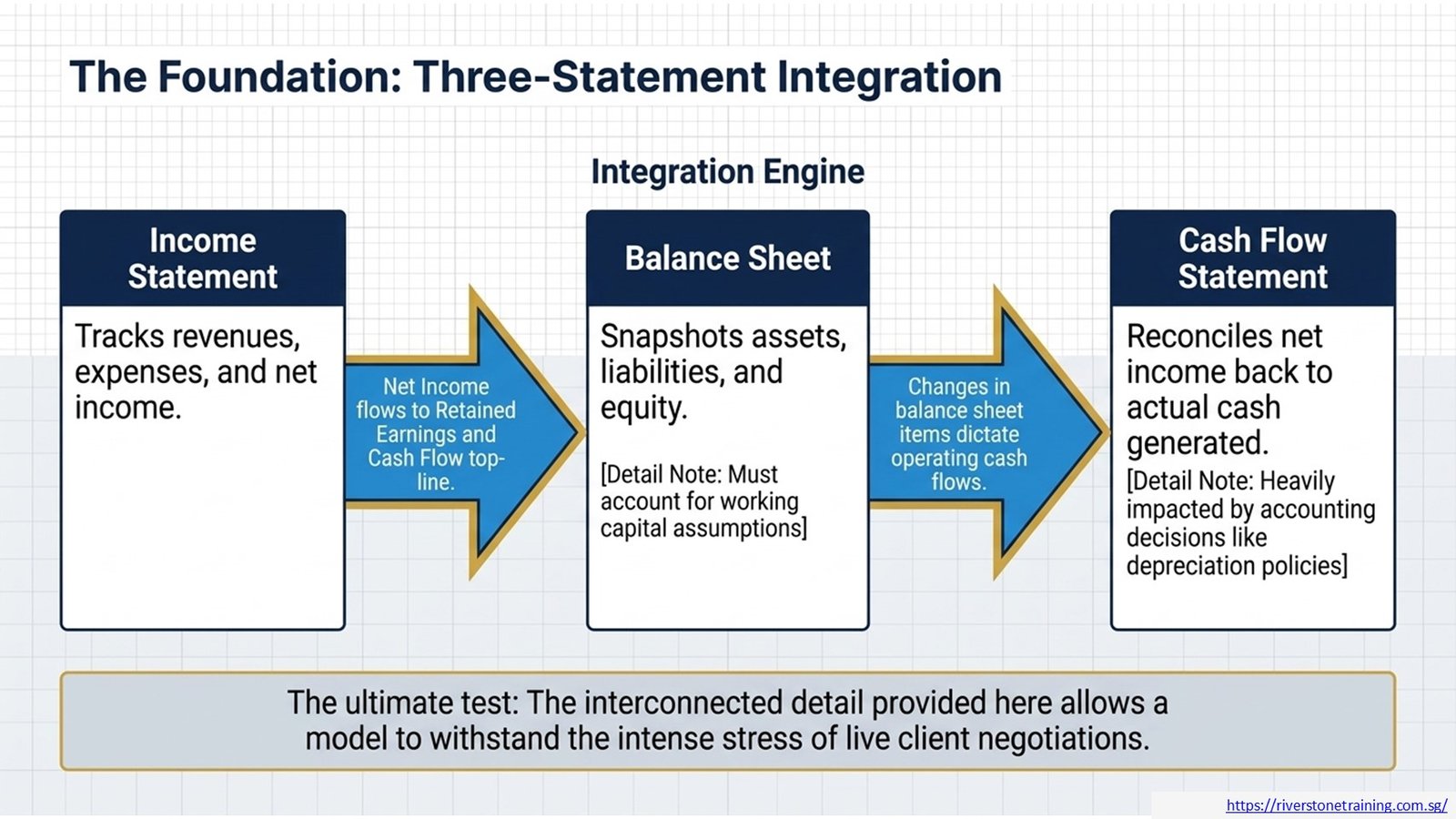
The three key financial statements are crucial for investment banking analysts to understand and, most importantly, relate to each other. A three-statement model connects the income statement, balance sheet, and cash flow statement together, with the change in one flowing into the other.
The analysts should also be familiar with the impact of accounting decisions (such as depreciation policies or working capital assumptions) on the results. The level of detail that can be provided to a client during meetings and negotiations is what will help a model to withstand the stresses of the negotiation.
How Do Financial Models Support Mergers and Acquisitions?
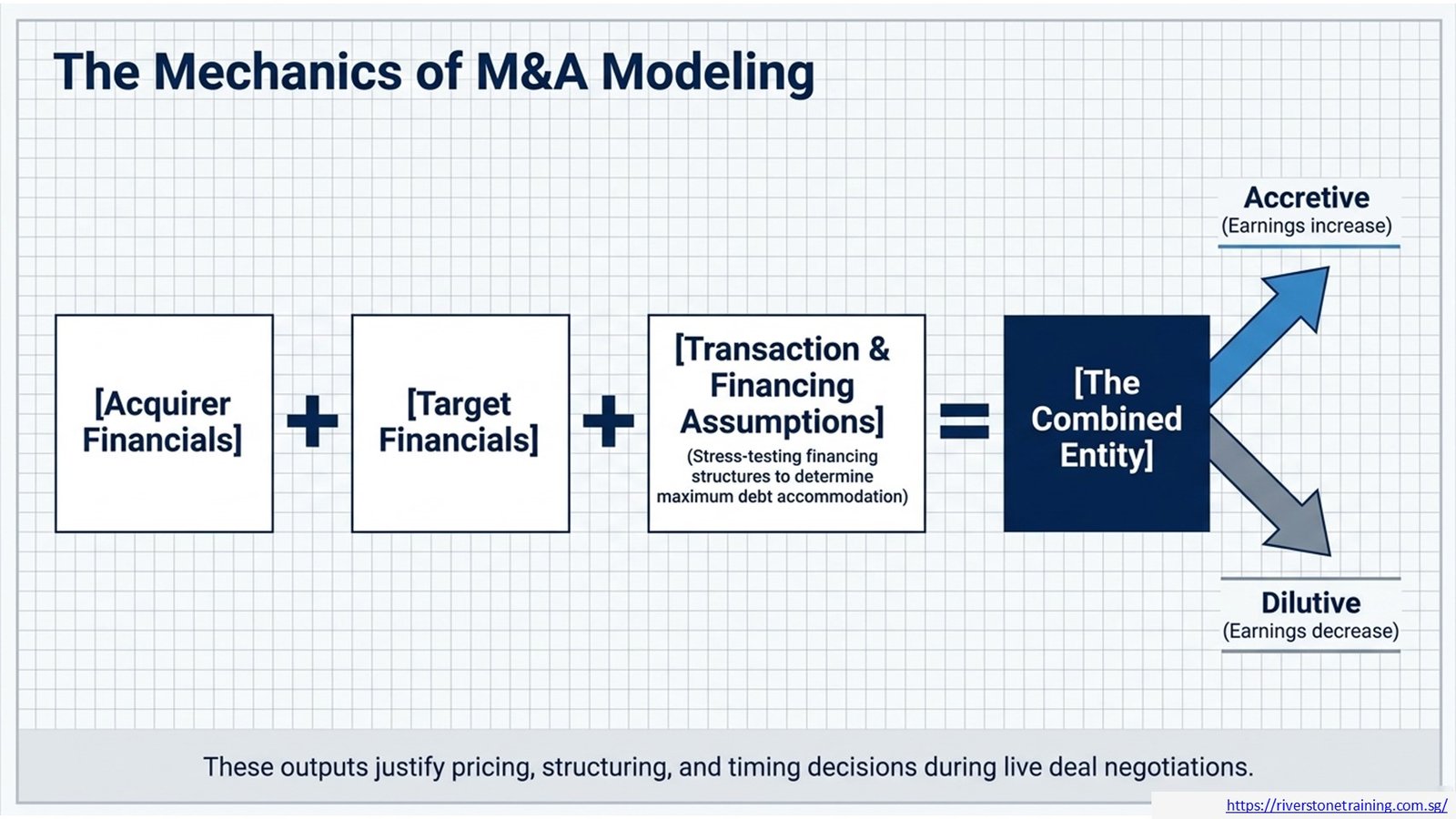
Financial models are used to assist with M&A transactions, where they serve to quantitatively assess how the transaction impacts the combined company’s earnings, capital structure, and company valuation. In an M&A model, the acquirer’s and the target’s finances are merged, transaction assumptions are added to the equation, and the transaction is then calculated to determine if it is accretive or dilutive to earnings.
These models also allow financing structures to be “stress-tested” to determine the amount of debt that a financing can accommodate. These outputs are provided to bankers as justification for pricing, structuring, and timing decisions during the deal process and are also presented to clients.
How Are Valuation Models Used in Investment Banking?
In investment banking, a valuation model is a set of equations used to calculate the value of a firm or asset, and is the foundation for making valuation recommendations in a deal, IPO, or fairness opinion. Valuation approaches are frequently used in tandem to create a range of values, not just one value, that’s defensible.
In the most typical format, banks offer valuation outcomes as a range, which incorporates a couple of various methods to reflect the variation of assumptions and market circumstances. This range provides clients with a more accurate price point than just one.
How Does DCF Modeling Support Investment Analysis?
In investment analysis, the DCF method can help in estimating the intrinsic value of a company by calculating the present value of future cash flows based on the firm’s projected cash flows. This approach requires analysts to take all things into account, such as long-term growth, margins, and the cost of capital, and not just short-term market prices.
Since the output of a DCF is extremely sensitive to the assumptions used, analysts also make tables that display how the value might change under various growth or discount rate levels. In financial modelling, sensitivity analysis is a fundamental component of any advanced curriculum which aims to equip students with the ability to present a range of results as opposed to false precision. Clients and senior bankers see this range as defensible and not merely mathematically right.
How Do Comparable Company Analysis and Precedent Transactions Work?
The idea behind comparable company analysis is to compare the target company to other publicly traded companies that are similar in size and type and then utilize valuation multiples like EV/EBITDA or price-to-earnings. This approach is based on current market pricing, not just long-term projections.
The precedent transaction analysis is similar but is based on the multiples that have been paid in previous transactions of similar companies. These two approaches provide a market-based valuation check for bankers, in addition to the intrinsic value generated by a DCF model.
Investment Banking Models
| Model | Purpose |
| DCF Model | Estimate intrinsic value |
| M&A Model | Analyze acquisition impact |
| Comparable Company Analysis | Compare market valuations |
| Three-Statement Model | Forecast financial performance |
How Does Investment Banking Modeling Support Deal Execution?
Investment banking modeling is a tool that can aid in the deal process, providing a live and updated model that works as a tool for the deal team to evaluate the impact of changes in transaction negotiations, financing arrangements, and deal structure as the deal progresses. This is not a single calculation but continually updated as new data is received.
Analysts continuously update models during execution to incorporate new terms, perform new scenarios for clients, and ready documentation for committee approval. Technical training can be directly applied to real deal responsibilities in this continuing modeling work.
What Excel Skills Are Required for Investment Banking?
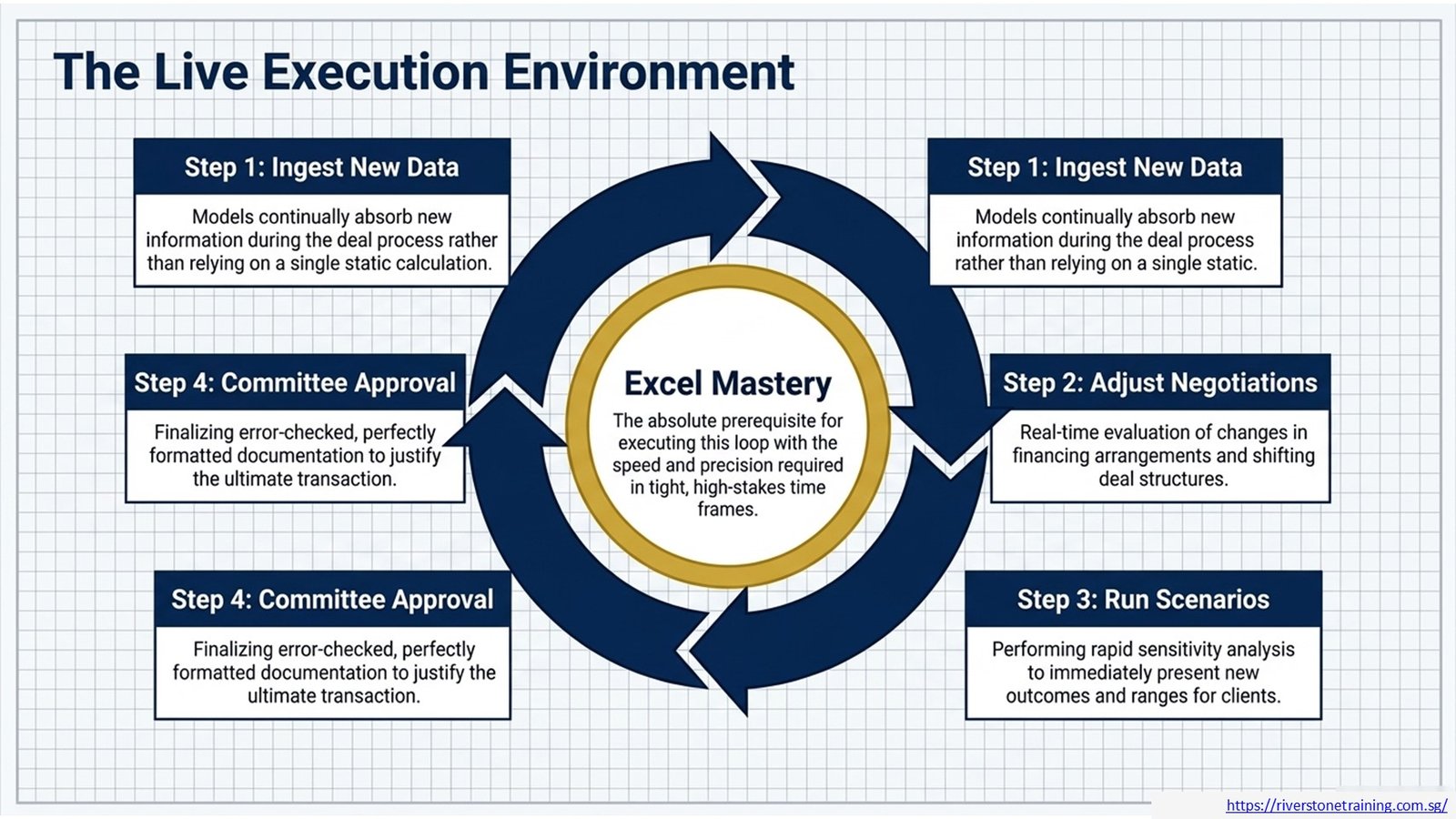
To excel at investment banking, you need to be quick and accurate with Excel and know how to use advanced functions and formatting conventions common to the investment banking community. Timings are important because in live deals, analysts have to construct or revise their models within a tight time frame.
In addition to being fast, models should be clearly labeled, easy to review by other people, and error-checked, as models are often passed around among team members. Speed and precision are essential parts of any serious financial modelling course.
How Do Financial Modeling Courses Teach Real-World Transaction Analysis?
Financial modeling courses teach real-world transaction analysis and do not rely on abstract exercises; instead, they rely on case studies based on actual or realistic deal situations. Learners construct models to represent mergers, leveraged transactions, or capital raises as bankers do with real-life transactions.
A case-based learning approach will build understanding of how to construct a model, how to make sense of the results, and how to communicate the results clearly. Program participants who complete this type of training are more likely to be able to make a positive impact on deal teams from their first weeks on the job.
What Skills Help Professionals Build Successful Investment Banking Careers?
Good investment bankers are made by being adept at technical modeling, having a keen eye for detail, and being efficient on the job. Those who can create accurate models rapidly with minimal rework are trusted more and given greater responsibility at an earlier age.
Communication is also important—analysts need to clearly articulate model assumptions and results to senior bankers and clients. Technical modelers who also have the ability to communicate well are seen to move further ahead than others who have only acquired technical skills.
Financial Modeling vs Investment Banking Applications
| Financial Modeling Skill | Banking Application |
| Valuation | M&A advisory |
| Forecasting | Financial projections |
| Sensitivity Analysis | Risk assessment |
| Financial Analysis | Deal evaluation |
How Does Financial Modeling Training Improve Career Opportunities?
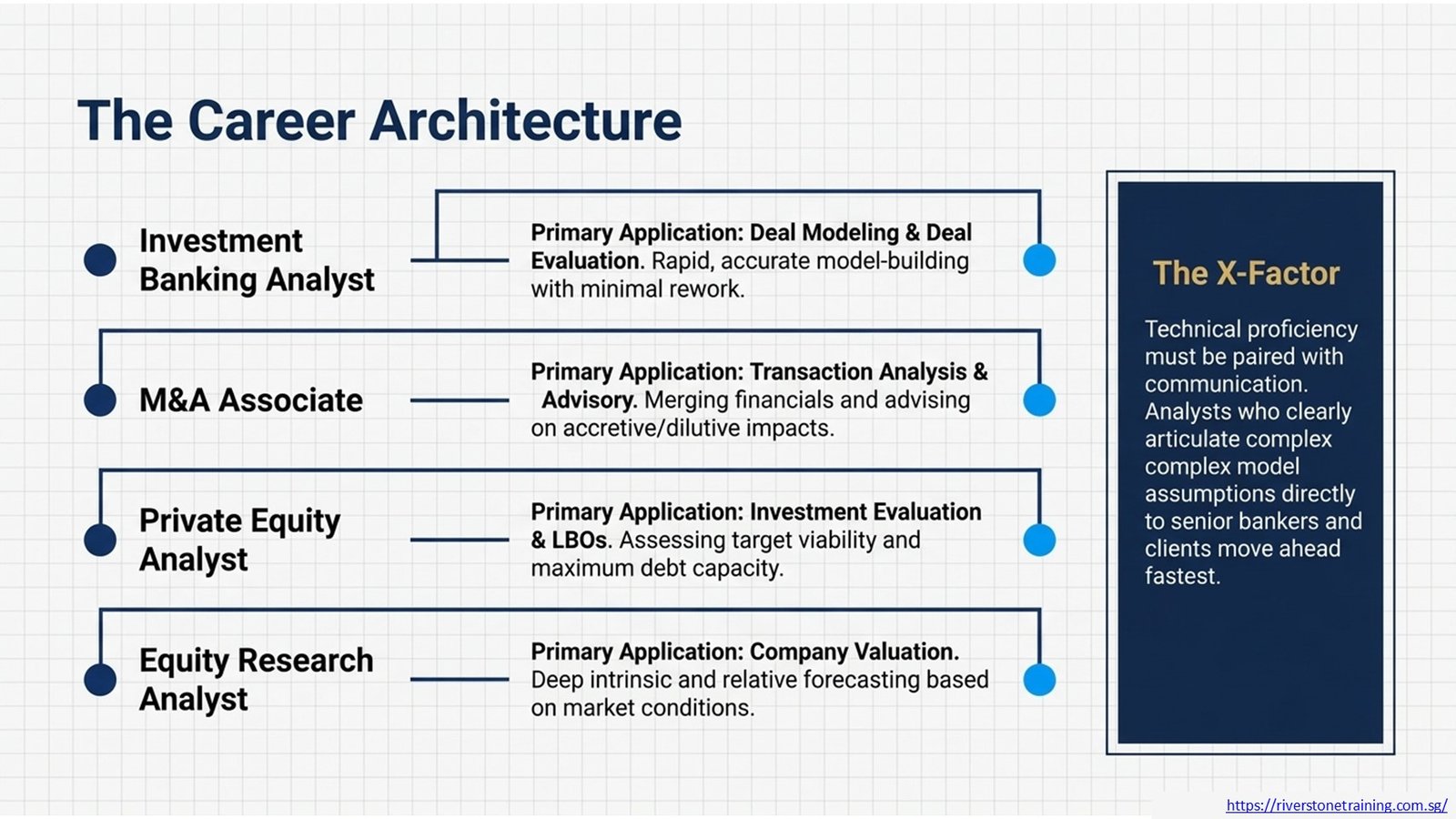
Financial modeling training enhances career prospects by empowering professionals with tangible skills and competencies that can be demonstrated through practical exercises and case studies, which can be assessed by employers. This is particularly useful in the case of candidates who have no prior banking experience and have to demonstrate technical skills.
Structured Training also provides a pathway to related jobs outside of investment banking, such as equity research, private equity, and corporate finance, because the ability to model and the maths skills are applicable to these areas as well. This versatility means that modeling training can be a long-lasting investment, even if a professional decides to pivot his or her career.
Career Roles and Modeling Applications
| Role | Modeling Application |
| Investment Banking Analyst | Deal modeling |
| Equity Research Analyst | Company valuation |
| M&A Associate | Transaction analysis |
| Private Equity Analyst | Investment evaluation |
Why Is Practical Modeling Experience Important for Finance Professionals?
For this reason, on-the-job modeling training is crucial, as theoretical knowledge alone cannot equip professionals with the rapid pace and accuracy needed in real-world deal situations. The models are built in a realistic setting with limited information (or time) to simulate the sorts of environments that investment banking groups may face.
People who have been doing modeling in the real world also make fewer mistakes when working under stress because they have already seen what the common mistakes are when they were getting their hands dirty when modeling, as opposed to during a real transaction where the consequences of their mistakes are real.
How Can Professionals Continue Developing Investment Banking Skills?
You can build on the basics of investment banking modeling through more advanced modeling, like leveraged buyout modeling, industry-specific valuation, or advanced M&A structuring. This popular sequence is reflective of that in real-life learning.
Continued practice is also a factor. The skills acquired through formal training are reinforced and extended by reviewing real transaction models, keeping up to date with market multiples, and gaining feedback from industry veterans.
Summary: Financial Modeling Foundations for Investment Banking
| Skill Area | Why It Matters |
| Three-Statement Modeling | Forecasts integrated financial performance |
| Valuation (DCF, Comps, Precedents) | Supports deal pricing and recommendations |
| M&A Modeling | Quantifies transaction impact and structure |
| Excel Proficiency | Enables fast, accurate model-building |
| Scenario and Sensitivity Analysis | Tests assumptions under real deal conditions |
Conclusion
Financial modeling is a course that equips professionals with the skills of performing valuation, forecasting, Excel, and transaction analysis, which are used by investment banking deal teams on a daily basis. The three-statement modeling, DCF valuation, comparable company analysis, and M&A modeling are models every analyst should be able to master so that they can provide accurate and efficient input during real deal scenarios. Financial modeling for advanced courses builds the technical skills needed for valuation, corporate finance, mergers and acquisitions, and investment analysis, and investment banking modeling offers hands-on experience of transaction workflow and deal execution. Structured modeling training coupled with regular, streamlined financial analysis practice should be a top priority for finance professionals seeking to build up their careers.