Financial modelers are trained for various financial careers, including banking, and Financial Modeling courses equip them with the ability to analyze financial statements, forecast financial statements, and gain insights into valuation, credit analysis, and cash flow in banking. Learners receive structured training in financial modeling for banking, which allows them to create the technical basis for making real-world banking decisions and develop a long-term career in financial modeling.
What Is Financial Modeling for Banking?
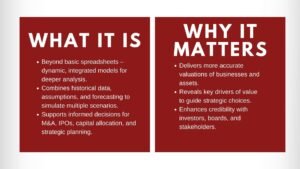
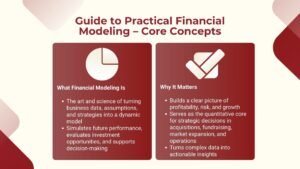
Financial modeling for banking involves creating a series of cash flow models in a structured spreadsheet to predict a company’s or a borrower’s finances for lending, investment and valuation purposes. It uses historical financial information and forecasts for the business to determine future income, cash flow and credit ratings.
Banking models are different from the general corporate models in terms of focus on debt servicing capacity, collateral coverage, and risk metrics. These models are used by analysts every day to analyze loans, make deals and consider investment opportunities.
Why Is Financial Modeling Important in Banking Careers?
Financial modeling is crucial because the financial decisions in banks, like loan approvals and interest rates for an acquisition, rely on accurate financial projections. If models are not reliable, banks run a risk of mispricing credit or investment opportunities.
The combination of the ability to build and interpret financial models jointly with the ability to rely exclusively on subjectivity can help the deal team, the credit committee, and senior management to provide data-driven recommendations.
How Do Financial Modeling Courses Teach Financial Statement Analysis?
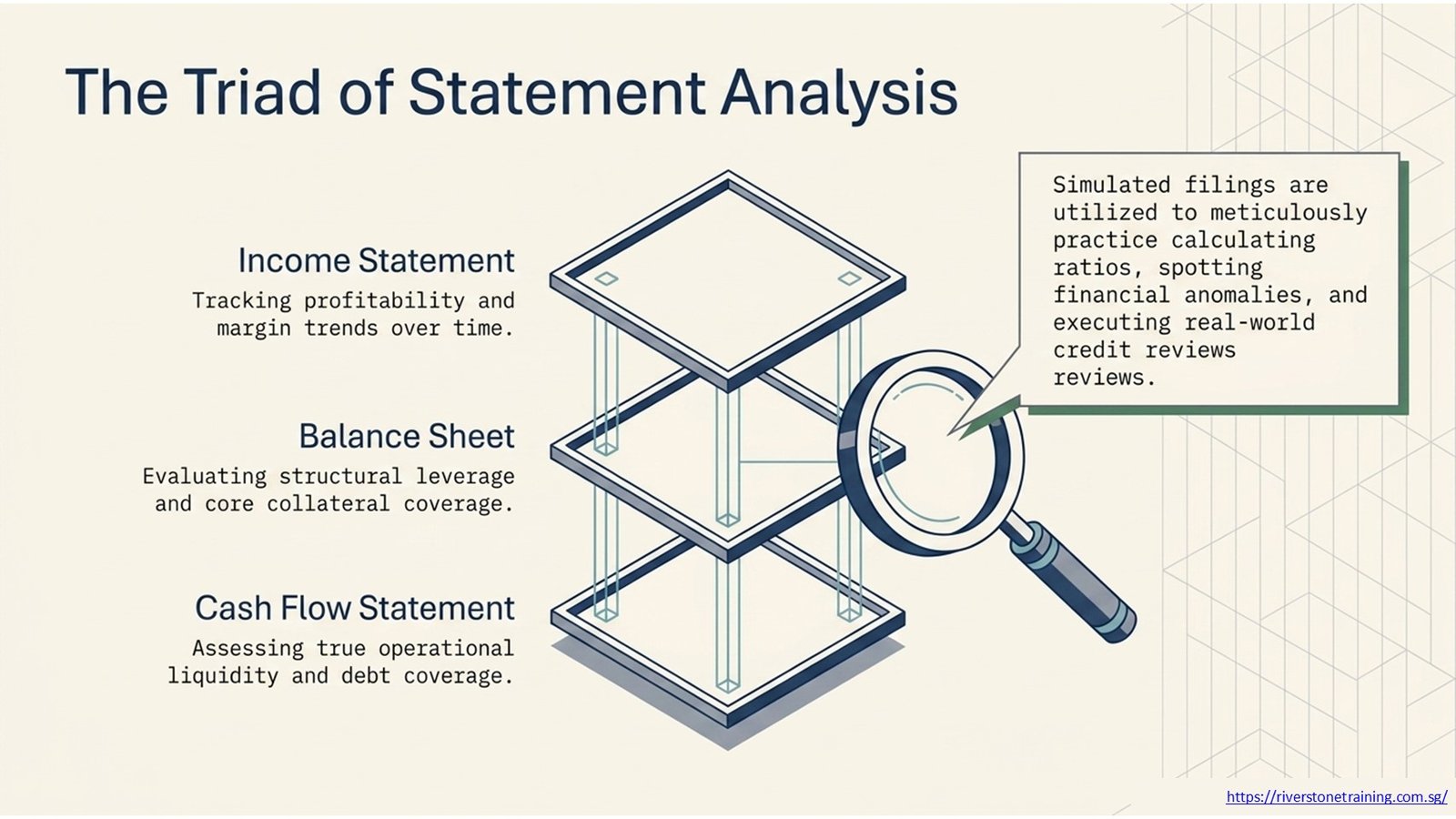
Financial modeling courses cover financial statement analysis, focusing on understanding the income statement, balance sheet, and cash flow statement in conjunction with each other. This involves spotting financial health or distress signals such as trends in profitability, liquidity, and leverage.
The courses generally employ a real or simulated company filing example to practice financial ratios calculations and identify inconsistencies, which is a skill that is directly applicable to credit review and equity research positions.
How Are Revenue and Expense Forecasts Built in Banking Models?
Revenue and expense forecasts are derived from an analysis of past growth trends, industry benchmarks, and management guidance and then extrapolated based on specific assumptions. Banking models are frequently correlated with certain revenue streams, including transaction fees or loan volume.
Expense forecasting works in much the same way, distinguishing between fixed expenses and variable expenses, and determining how the profitability will change when there are volume changes. This type of detail can help to more accurately assess both the debt and the return on investment.
How Does Cash Flow Modeling Support Banking Decisions?
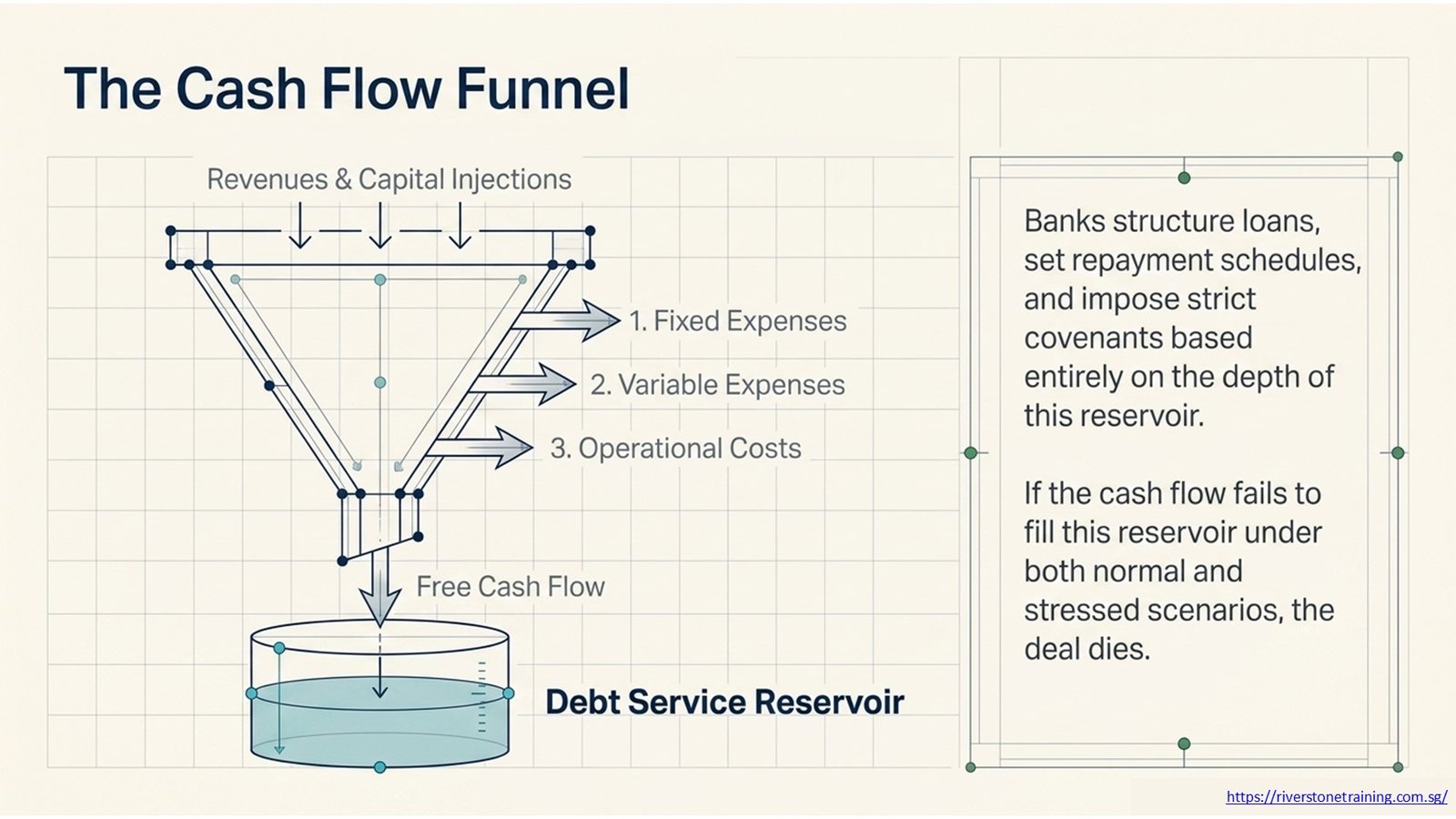
Cash flow modeling can assist bankers in making decisions about money flow, whether it is for a borrower or an investment opportunity, and determine if enough cash can be generated to pay the debts. This analysis helps banks structure loans and make the terms more favorable, set repayment schedules, and impose covenants.
These models typically produce free cash flow and debt service coverage metrics, enabling the credit team to see how these debts will be covered in normal and stressed scenarios.
How Are Valuation Models Used in Banking?
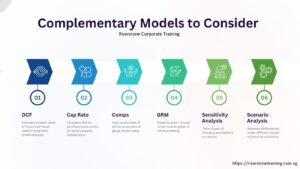
In the banking sector, valuation models are employed to determine the fair value of a company, asset, or investment opportunity, which is used to aid decision-making regarding mergers, acquisitions, and equity financing. Some of the most common methods are discounted cash flow analysis and comparable company analysis.
Valuation models are useful for investment banking analysts to guide clients on deal pricing, and valuation techniques can be simplified to evaluate the value of the collateral or the viability of the businesses that are being considered for a loan by a corporate banking team.
How Do Banking Professionals Use Financial Models for Credit Analysis?
Financial models are used for credit analysis in the banking industry to assess the ability of the borrower to pay back by forecasting the borrower’s income, leverage and cash flow. These models are used to calculate suitable loan amounts, interest rates and covenants.
These models also incorporate sensitivity testing to determine how the borrower’s financial position would be affected by negative events like declining income, increasing interest rates, etc.
How Does Financial Modeling Support Loan and Investment Decisions?
Financial modeling helps in making investment and loan decisions by allowing calculation of risk and return in several scenarios before the investment of money. This enables banks to look at opportunities in a consistent way, based on common financial terms.
The model outputs will be used by decision-makers to decide if a transaction is acceptable for the institution based on risk and return considerations, including debt service coverage ratios, internal rate of return, and break-even analysis.
What Excel Skills Are Essential for Banking Financial Models?
Banking financial modeling requires proficiency in creating dynamic formulas, lookup functions, and designing financial models with input, calculation, and output areas. These practices eliminate errors and facilitate the audit of models.
Other useful skills are how to validate data, how to handle circular references in calculating interest, and how to create flexible assumptions so that the model can be easily changed to different scenarios without having to rebuild it from scratch.
How Do Scenario and Sensitivity Analysis Improve Banking Decisions?
The use of scenario analysis and sensitivity analysis enhances the ability to make informed decisions in the banking sector, as it helps to understand the impact of different assumption variations on the financial outcomes. This provides banks with a broader picture of potential outcomes, as opposed to a single forecast.
These methods are employed by credit and risk teams to simulate unfavorable scenarios and assess borrowers and investments, thus protecting the soundness of the decision even in case of market conditions changing out of the blue.
Banking Financial Modeling Skills
| Skill | Banking Application |
| Financial Statement Analysis | Credit assessment |
| Forecasting | Business planning |
| Valuation | Investment decisions |
| Cash Flow Modeling | Lending analysis |
What Common Financial Models Are Used in Banking?
In the banking sector, there are several commonly used financial models, such as three-statement models, discounted cash flow models, and credit assessment models, all of which serve various purposes in financial decision-making. Professionals trained in financial modeling for banking learn to apply the right model type depending on whether the task involves lending, valuation, or financial planning.
Budget and forecasting models are also common in corporate banking and FP&A roles to aid planning of resource allocation and tracking performance against targets.
Common Financial Models Used in Banking
| Model | Purpose |
| Three-Statement Model | Integrated financial forecasting |
| DCF Model | Business valuation |
| Credit Model | Borrower assessment |
| Budget Model | Financial planning |
What Skills Are Developed Through Financial Modeling Courses?
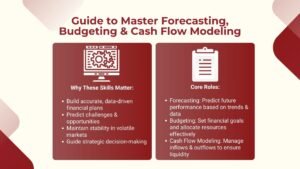
Financial modeling courses build on practical skills such as financial statement analysis, forecasting, valuation, and financial modeling skills using Excel. The skills are delivered in a practical manner with exercises that replicate the day-to-day banking processes instead of theory.
In addition, learners acquire analytical thinking and attention to detail, which are critical when models are employed in making meaningful loan or investment decisions where accuracy has a direct impact on the financial results.
How Can Financial Modeling Improve Career Opportunities in Banking?
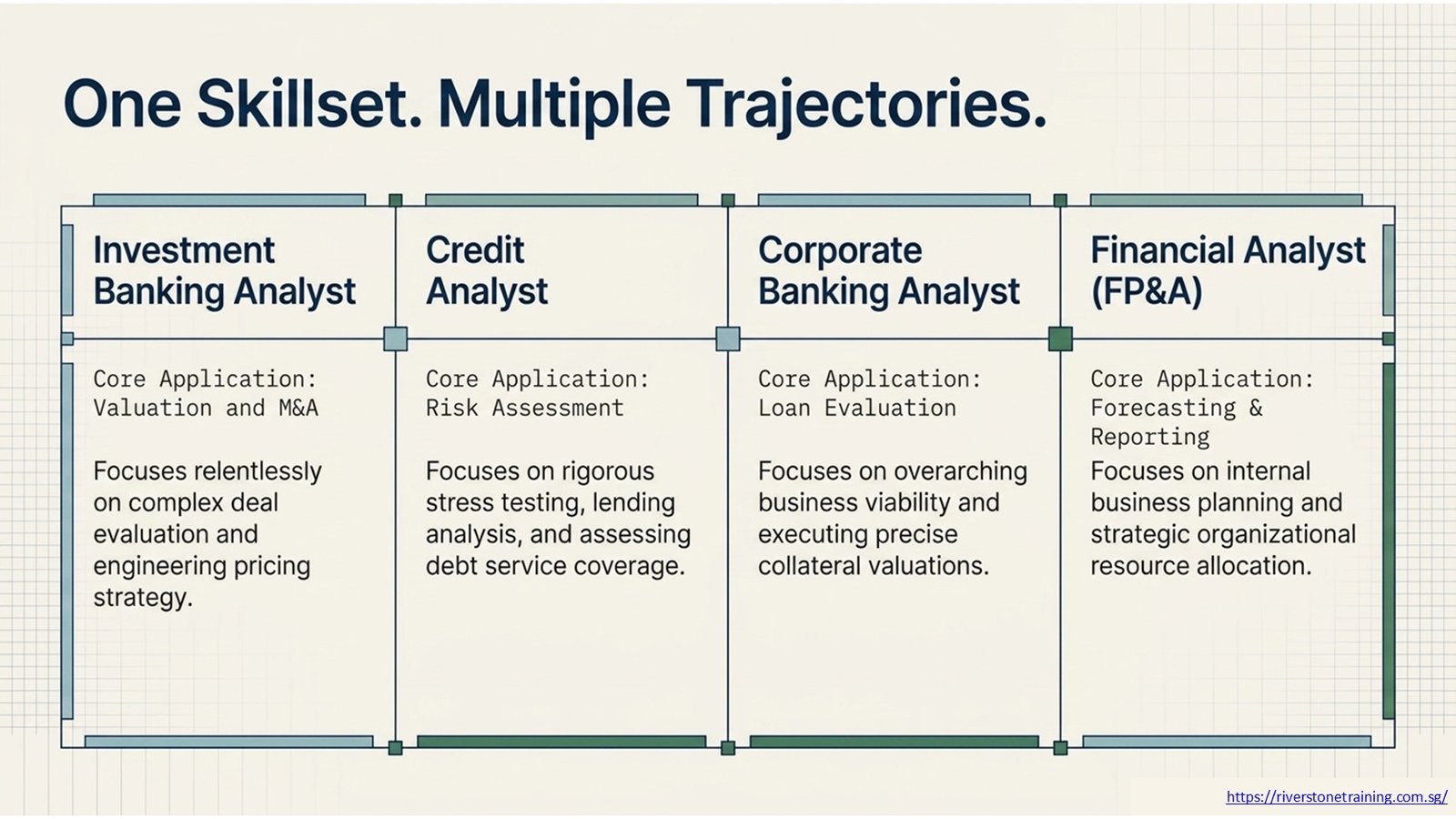
Financial modeling enhances employment prospects in banking by providing financial analysts, associates, and financial advisors with a clear, tangible suite of technical skills that can be readily integrated into their work. Employers consistently value candidates who can build and interpret models without extensive supervision, making this a strong foundation for a financial modeling career across multiple banking functions.
Professionals who work well at modeling will also have the advantage of being able to transition from credit banking to corporate banking and from corporate banking to investment banking, depending on their interests and skills.
Banking Career Paths
| Role | Modeling Application |
| Investment Banking Analyst | Valuation and M&A |
| Credit Analyst | Risk assessment |
| Corporate Banking Analyst | Loan evaluation |
| Financial Analyst | Forecasting and reporting |
What Industries Beyond Banking Use Financial Modeling Skills?
In private equity, corporate finance, real estate, and consulting, financial modeling skills are applied to forecasting and valuation, which help in making investment and strategic decisions. This is a skill set that can be transferred from traditional bank jobs.
Banking professionals who develop robust models in the environment tend to carry their skills into their next career steps—such as corporate finance, FP&A, or investment management—where they can apply similar skills.
Financial Modeling Applications in Banking
| Banking Function | Modeling Use |
| Lending | Credit analysis |
| Corporate Finance | Valuation |
| Risk Management | Scenario analysis |
| Investment Banking | Deal evaluation |
Why Is Continuous Learning Important for a Financial Modeling Career?
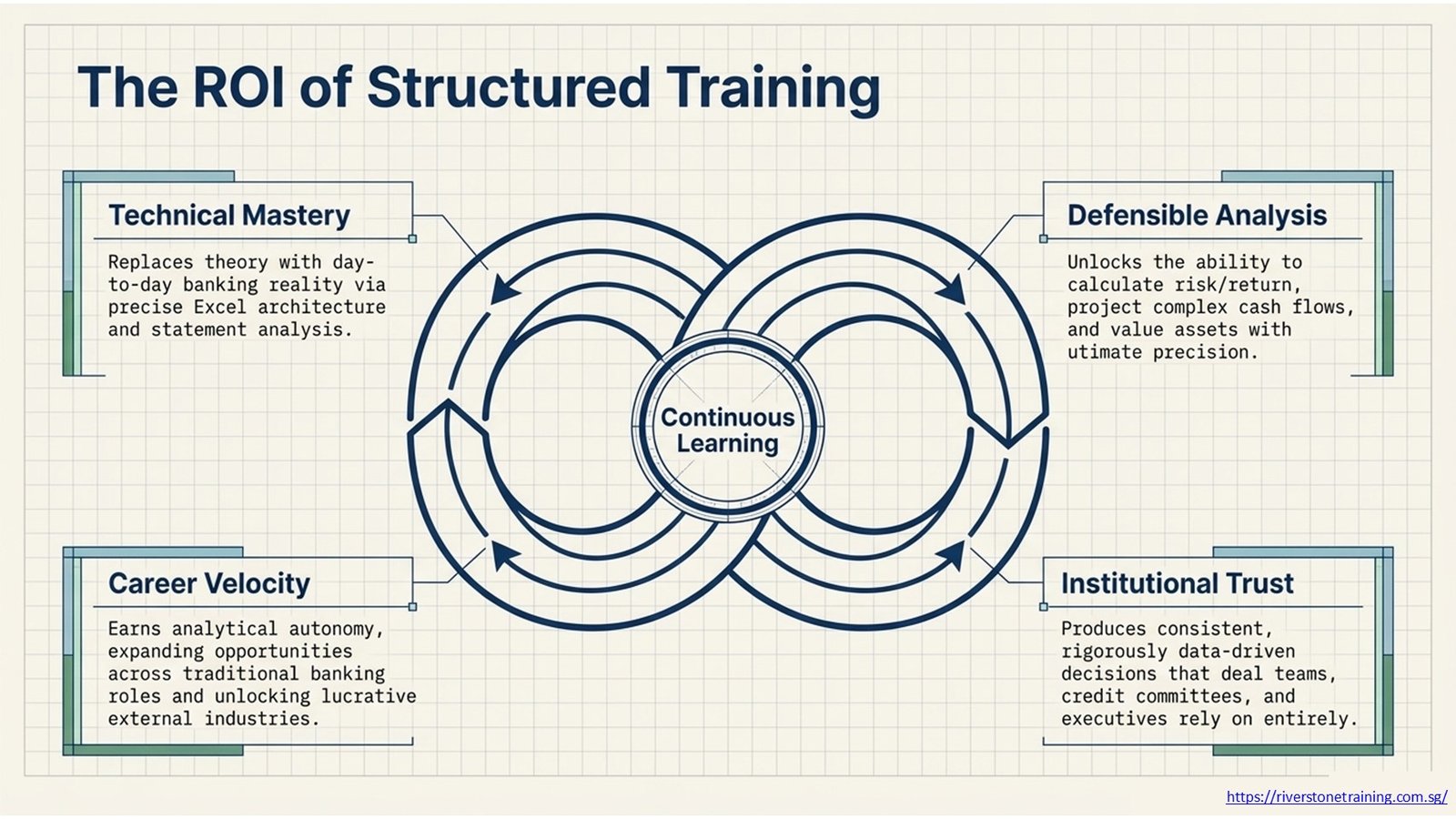
It is beneficial to have a continuous learning mentality as financial modeling skills, regulatory requirements, and tools used in the industry are continuously changing, and static skills and knowledge can easily become obsolete. Continuing education keeps professionals up-to-date on best practices and new analytical techniques.
It is also important that professionals stay up to date on the most current case studies and modeling standards, which can be practiced again and again, to ensure accuracy and confidence in handling increasingly complicated transactions as they progress through their career.
Conclusion
Financial modeling courses equip students for jobs within the finance industry, cultivating skills that are specifically relevant to financial statement analysis, financial forecasting, valuation, and credit analysis, all of which are essential in banking. These technical skills are useful in making more accurate and defensible decisions in the banking sphere.
Financial modeling skills boost employability and career growth as banking institutions depend on the use of data-driven analysis. Structured training is a good step to take to develop a successful financial modeling career for professionals looking to acquire knowledge of financial modeling for banking.
Summary: Key Takeaways
| Focus Area | Professional Benefit |
| Financial Statement Analysis | Stronger credit and risk assessment |
| Forecasting and Valuation | More informed lending and investment decisions |
| Excel Modeling Skills | Accurate, auditable financial models |
| Career Development | Expanded opportunities across banking roles |