Financial modeling courses involve teaching cash flow forecasting, providing students with a structured framework to create financial models, analyze forecast assumptions, and convert financial data into actionable insights for business decision-making. Hands-on experience working with a financial modeling cash flow forecast enables financial analysts, FP&A, corporate finance, and investment professionals to build technical and analytical proficiency for making accurate and confident forecasts.
What Is Cash Flow Forecasting in Financial Modeling?
The term ‘cash flow forecasting’ refers to the process of predicting either the cash that comes into the company or the cash that goes out of the company over a specific period of time, which allows the business to manage liquidity, make investment decisions and aid strategy decisions. In financial modelling, this is done in a layered manner with revenue and expense schedules, working capital schedules, and capital expenditure schedules.
A good cash-flow forecast isn’t simply a spreadsheet — it’s part of a three-statement financial model that links the income statement and balance sheet to create a cash flow statement that’s dynamic. Financial modeling courses provide students with the instruction needed to systematically establish these links, so that all assumptions are applied uniformly and in a clear manner.
Cash Flow Forecasting Components
| Component | Purpose | Business Application |
| Revenue Forecast | Estimate future sales income | Sales planning and target-setting |
| Expense Forecast | Perform operating cost estimates for the future | Money saving and budgeting. |
| Working Capital | Operational liquidity requirements of the project | The management of inventories and receivables. |
| Capital Expenditure | Plan future asset investments | Long-term growth and asset planning |
| Free Cash Flow | Calculate any money that is left over after bills. | Dividend policy, debt repayment, and reinvestment |
Why Is Cash Flow Forecasting Important for Business Planning?
One of the most important aspects of business finance is cash flow forecasting, as it’s not profit alone that will make a business successful – bad cash management can mean the death of a prosperous business even if profits are on the rise. Proactive measures can be taken by businesses to ensure that they have enough funds, or else to save money, by knowing the cash flows in the future.
A cash flow forecast is the backbone of all important financial decisions made by FP&A professionals, financial analysts and business owners alike, including hiring plans, capital investment, debt management and dividend policy. Financial modeling training helps professionals learn that it is not just a reporting tool but a forward-looking planning tool to inform strategy.
What Data Is Required Before Building a Cash Flow Forecast?
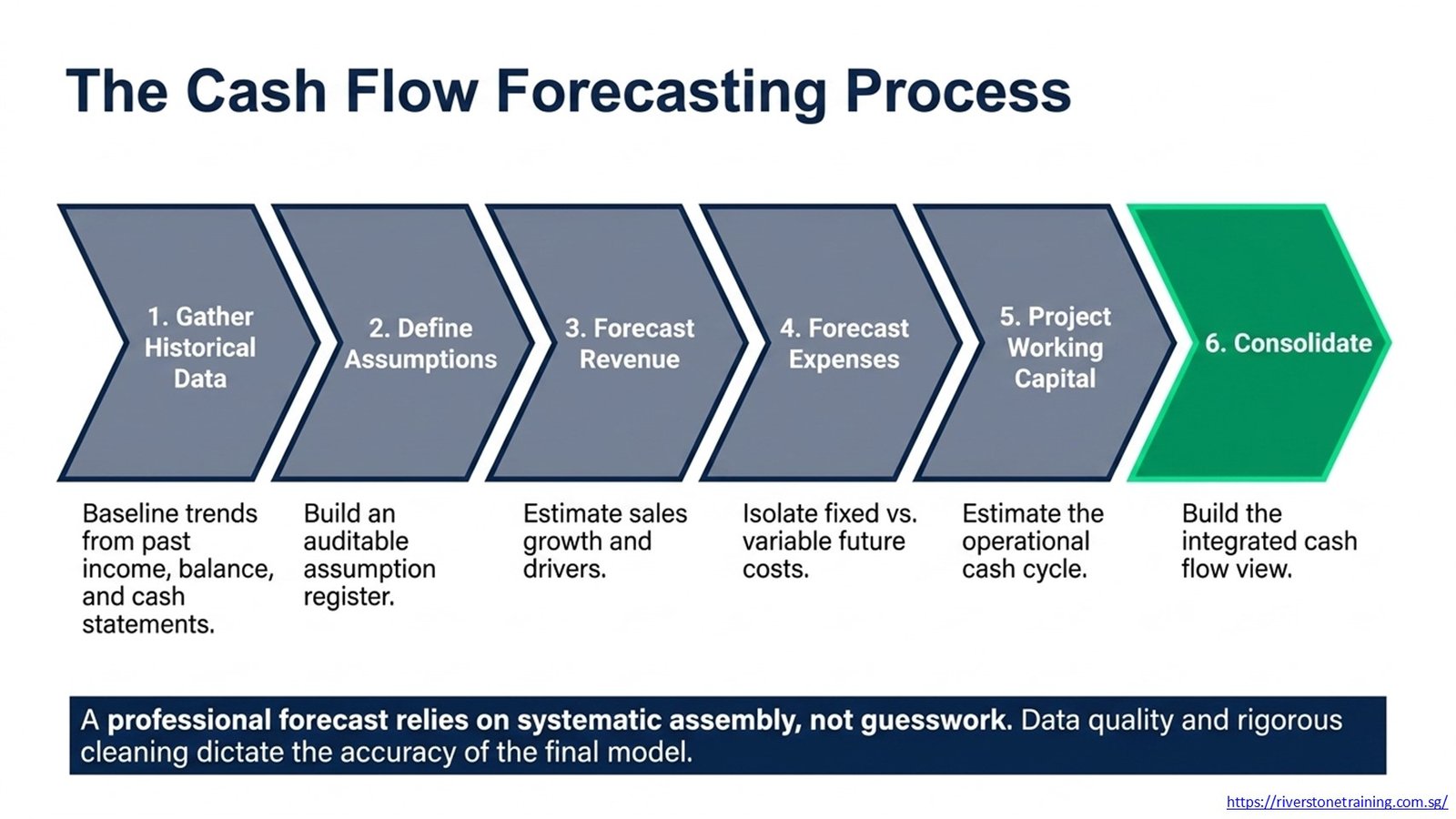
Analysts should first compile financial data from previous periods, like income statements, balance sheets, and cash flow statements, to gain insights into patterns and trends before building a forecast. This information is the basis on which forecast assumptions are made, and, consequently, the basis on which the projections are made, and not on guesswork.
Financial modeling courses highlight the fact that how well financial data is handled is linked directly to the accuracy of the forecasting. Learners are given training to evaluate, tidy, and arrange source data before creating their models, looking for inconsistencies, missing periods, or unusual pieces of data that might affect trend analysis. A strong data foundation is an essential first step to any professional forecasting process.
The Cash Flow Forecasting Process
| Step | Activity | Objective | Output |
| 1 | Gather historical data | Identify trends and patterns | Data baseline |
| 2 | Define forecast assumptions | Build forecast foundation | Assumption register |
| 3 | Forecast revenue | Estimate sales growth | Revenue projection |
| 4 | Forecast operating expenses | Estimate future costs | Expense schedule |
| 5 | Project working capital | Estimate cash cycle needs | Working capital model |
| 6 | Consolidate into cash flow model | Build an integrated cash flow view | Cash flow statement |
How Do Financial Modeling Courses Teach Revenue Forecasting?
Forecasting revenue is often the first large task in creating a cash flow model, and there are a number of ways for accurately predicting the sale of goods and services in the future, which are taught in financial modeling courses. Typically, the three methods used are growth rate assumptions, driver-based forecasting (revenue correlation with business drivers like price or customers) and market share analysis.
In the case of a retail store, for instance, there could be an expectation of how many customers they anticipate visiting and what the average transaction amount is, and then multiplying the two numbers. For a SaaS company, the revenue forecast could involve monthly recurring revenue and churn rates. Financial modeling training will help students identify the best forecasting option for their business model, develop elastic inputs of assumptions, and record the rationale behind the forecast in a transparent and auditable way.
How Are Operating Expenses Forecasted in Financial Models?
Operating expense forecasting involves the ability of analysts to accurately distinguish between fixed and variable expenses, which vary based on the amount of business being conducted. Financial modeling courses instruct students on how to create an expense schedule that incorporates these factors and leverage headcount plans, cost ratios from the past, and contractual data to forecast future spending.
For example, a manufacturing company might estimate the cost of the raw materials as a variable ratio of its revenue, and then the costs of the plant as fixed. Financial modeling training can help finance professionals to critically evaluate and challenge their assumptions about expenses, to run stress tests on their cost forecasts under various operating scenarios, and to communicate costs to management in a way that enables them to make decisions.
How Do Analysts Project Working Capital Requirements?
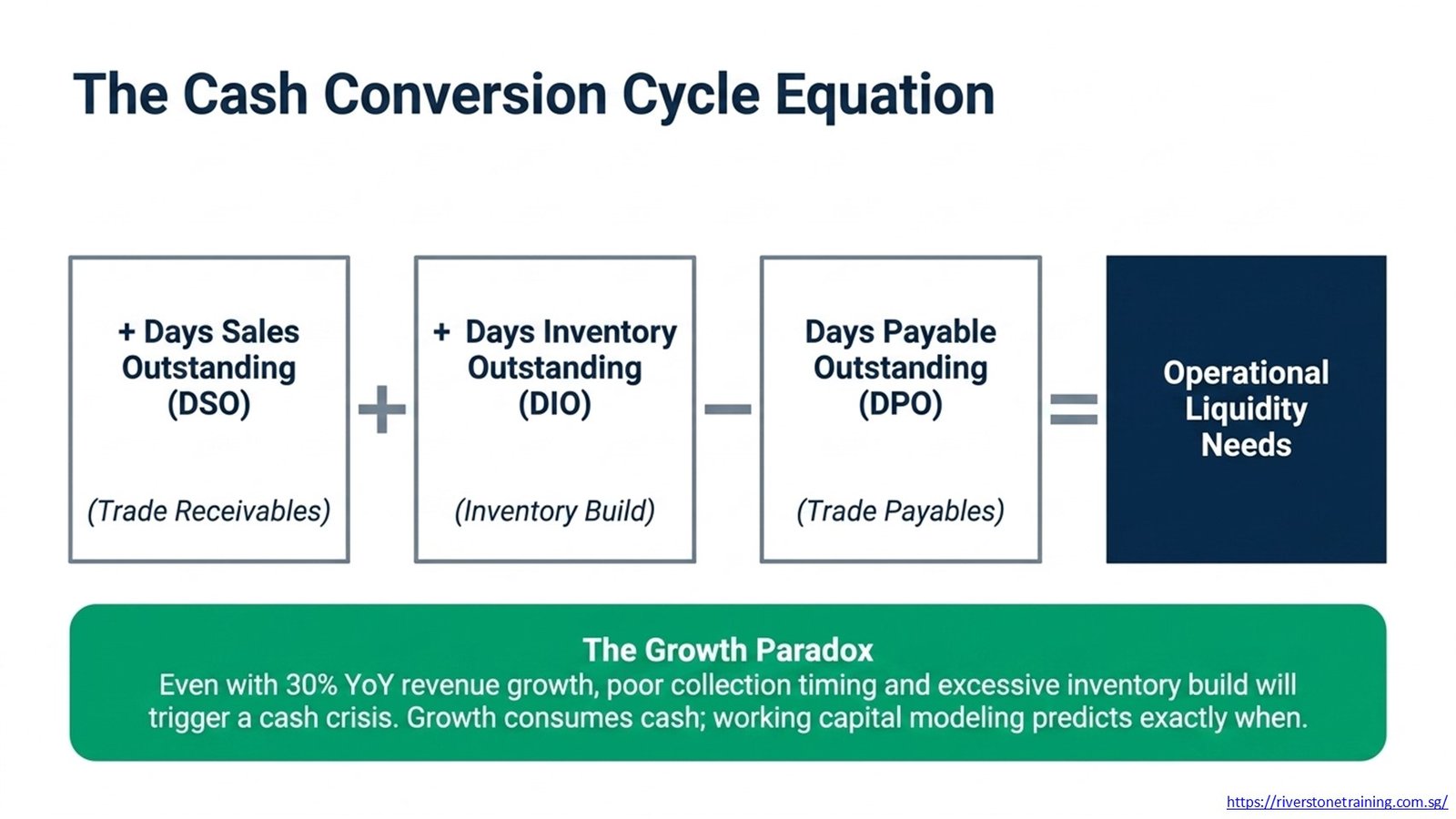
Working capital forecasting is the process of predicting cash used in the daily operations of the business (i.e., changes in trade receivables, inventory, and trade payables). Financial modeling courses educate students on how to systematically model changes in working capital in terms of Days Sales Outstanding (DSO), Days Inventory Outstanding (DIO) and Days Payable Outstanding (DPO).
For companies that are growing quickly, forecasting working capital is especially crucial because, as they grow, they can be using up cash even though they are making more money. Even when a company’s revenues are increasing by 30% per year, cash flow problems can occur if the company doesn’t get its receivables collected on time and/or it has too much inventory. Financial modeling training enhances the analytical ability needed to predict such cash timing shifts and accurately account for them in a forecast.
How Is Capital Expenditure Incorporated Into Cash Flow Forecasts?
The challenge in forecasting capital expenditure (CapEx) is to differentiate between maintenance CapEx, which is the amount needed to keep existing assets running, and growth CapEx, which is the amount that is needed to expand and add new capabilities. Financial modeling courses teach students to create specific CapEx plans that reflect the investment timing and asset depreciation/expense, and their impact on the balance sheet and cash flow statement downstream.
CapEx profile of a business is a key determinant for investment analysts and corporate finance practitioners who determine the generation of free cash flow. Financial models not including or simplifying the CapEx are likely to misrepresent a company’s free cash flow, thereby misinforming a valuation. Courses educate students as to the importance of CapEx modelling as part of any serious cash flow forecast and not as an afterthought.
How Do Financial Modeling Courses Teach Scenario Analysis?
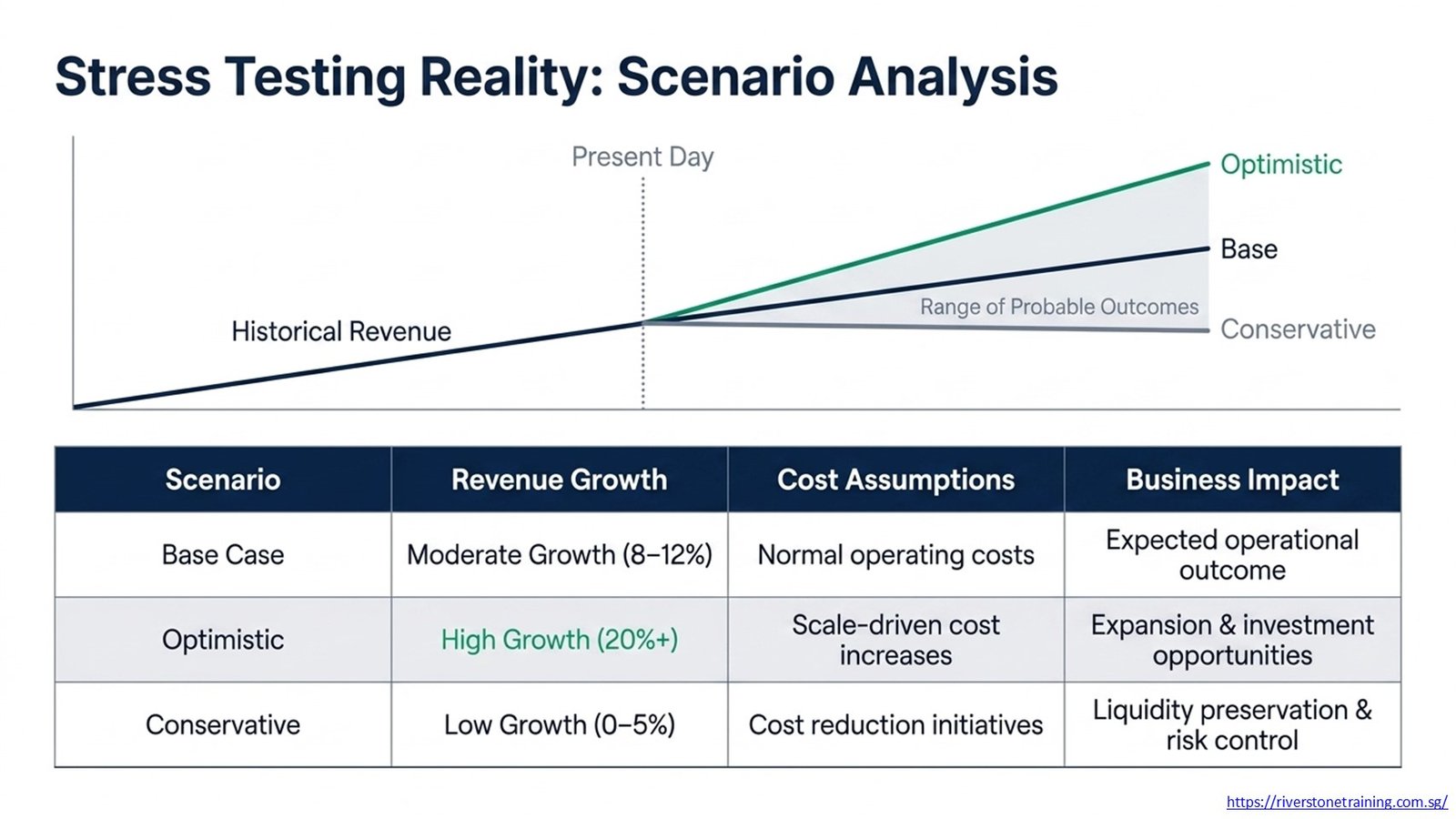
One of the most useful skills taught in financial modeling training is scenario analysis, which refers to the creation of various scenarios of a forecast to account for the different business conditions. Analysts are not expected to make one set of assumptions; they are expected to make base case and optimistic and pessimistic scenarios that represent realistic ranges of business outcomes.
This skill has a direct application in board-level financial presentations, investor communication and strategic planning. For a company considering entering a new market, scenario analysis would be used to illustrate how various forecasts of revenue growth and cost scenarios would affect the company’s financial results, providing the decision makers with a better understanding of the risks and opportunities involved in entering the new market before investing money.
Scenario Analysis Comparison
| Scenario | Revenue Growth | Cost Assumptions | Business Impact |
| Base Case | Moderate (8–12%) | Normal operating costs | Expected operational outcome |
| Optimistic | High (20%+) | Scale-driven cost increases | Expansion and investment opportunities |
| Conservative | Low (0–5%) | Cost reduction initiatives | Liquidity preservation and risk control |
What Role Does Sensitivity Analysis Play in Forecasting?
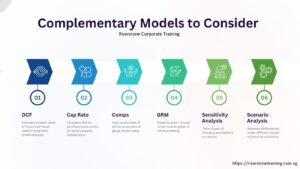
In addition to scenario analysis, sensitivity analysis helps to identify the effects of specific variables (like revenue growth, gross margin, or interest rates) on the results of forecasts. Financial modeling courses instruct students how to create data tables and sensitivity matrices in Excel to quickly determine what happens to cash flow, profit, or valuation if there is a change in a key assumption.
In investment analysis, it is essential to consider the sensitivities of a DCF valuation to changes in the discount rate and terminal growth rate, which can provide a range of realistic values for a business. Financial staff members who can create and analyze sensitivity analyses are more prepared to offer well-rounded, data-driven suggestions to stakeholders and handle uncertainty in their projections.
How Does a DCF Financial Model Use Forecasted Cash Flows?
The Discounted Cash Flow (DCF) is a model that calculates the intrinsic value of a business by discounting the free cash flow of a business to its present value using an appropriate discount rate. Financial modeling courses teach that the accuracy of a DCF valuation hinges directly on the accuracy of the forecast of cash flows; as part of that, an accurate forecast of cash flows is a prerequisite for any valuation that is going to be credible.
Students are taught how to calculate unlevered free cash flow, set up an appropriate Weighted Average Cost of Capital (WACC), and utilize terminal value assumptions to create a complete DCF financial model. These skills are directly applicable in investment banking, private equity, and corporate development jobs, where DCF analysis is a central theme in key transaction decisions.
What Common Forecasting Mistakes Do Financial Modeling Courses Address?
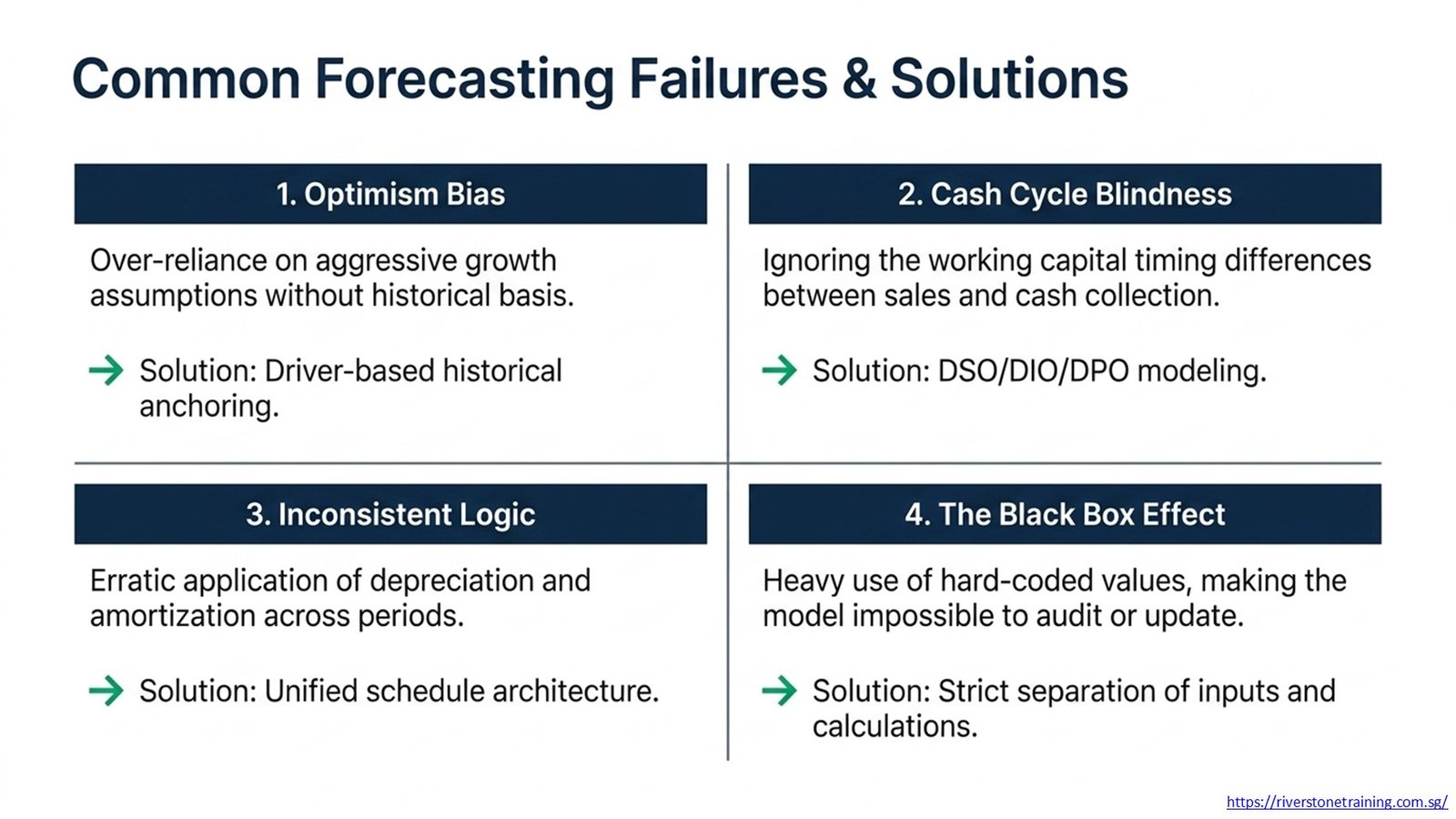
Financial modelling training focuses on the most prevalent mistakes that can be identified as compromising the reliability of financial forecasts. These include over-reliance on overly optimistic growth assumptions, not accounting for the working capital cycle, inconsistently using depreciation and amortisation, and creating models that are difficult to audit or update because they use hard-coded values throughout the spreadsheet.
Courses provide the opportunity to develop models that have distinct assumptions as inputs, a clear meaning for the formula logic written and a consistent structure in all periods. Forecasts made by analysts who are familiar with the sources of such errors (and how to avoid them) are not only more accurate, but are also more easily reviewed, communicated and updated as business conditions change.
How Can Excel Improve Cash Flow Forecast Accuracy?
In the professional financial world, Excel continues to be the essential financial modeling and cash flow forecasting software. Financial modeling courses help students master Excel and apply it in a precise manner, including functions like OFFSET, INDEX/MATCH, SUMIFS and IFERROR, as well as advanced features like dynamic ranges, named ranges and structured tables that enhance the flexibility and minimize the margin for error of a model.
In addition to individual functions, financial modelling training focuses on best practices for model architecture, which includes the correct way to organize a workbook with clearly labelled input, calculation and output sheets, consistent row and column formatting and not merging cells to cause formula references to become invalid. These skills in Excel can be used as they are in the creation of more accurate, polished, and sophisticated cash flow projections that are expected in job opportunities for corporate and investment finance.
Financial Modeling Skills and Their Applications
| Skill | Workplace Application | Career Benefit |
| Revenue Forecasting | Annual budgeting and sales planning | Valued in FP&A and corporate finance roles |
| Scenario Analysis | Strategic planning and risk assessment | Strengthens analytical decision-making |
| Sensitivity Analysis | Testing assumptions and stress testing | Improves forecast credibility |
| DCF Valuation | Investment evaluation and M&A analysis | Essential for investment analyst roles |
| Three-Statement Modeling | Integrated financial reporting and planning | Core competency for financial analysts |
| Cash Flow Modeling | Liquidity management and capital planning | Sought after in banking and PE |
What Practical Skills Are Developed Through Cash Flow Modeling Training?
Structured financial modeling training instills a comprehensive range of practical skills, far beyond just being proficient with a spreadsheet. Learners will learn to analyse financial statements, understand the most important drivers of the business, create structured forecast models, incorporate scenario and sensitivity analysis, and communicate financial results to non-financial decision makers.
These skills can be used in a variety of professional settings, from creating an annual budget in a corporate finance team to developing financial projections for a startup to present to investors. Hands-on financial modeling training provides a major edge to finance students and individuals looking to switch careers, because employers always appreciate the ability to create and explain a financial model rather than just a pre-prepared model.
How Can Cash Flow Forecasting Support Career Development?
The ability to forecast cash flow and make financial models is among the most prized skills in the field of finance. Analysts regularly create, use and test financial models in the fields of FP&A, investment banking, private equity, corporate development and business finance. Experts who have invested in mastering these skills in formal education invariably experience better job performance and Career Progression.
In addition to being technically proficient, high-performing finance employees can also communicate the results of their forecasts in a way that resonates with the business and makes them understandable. Financial modeling courses cover both aspects: how to create a realistic financial forecast and how to communicate the financial forecast effectively to the decision makers, investors, and boards.
Conclusion
Financial modeling courses are structured and skills-oriented, incorporating practical application of financial modeling techniques in the context of a business scenario. Financial modeling training is applicable to a wide variety of professional finance roles, from revenue and expense forecasting to working capital management, from working out the CapEx plan to doing scenario analysis or DCF valuation.
Forecasting cash flow isn’t just a numbers game; it’s essential for business planning, helping finance professionals assess strategic alternatives, handle liquidity risk, and make sound investment decisions. Those who invest in these competencies are more likely to play a high-level role and add value to their organizations.
Structured financial modeling training is one of the most effective methods for finance professionals, FP&A specialists, investment analysts, and those looking to enhance their forecasting skills to be more technically credible and strategically impactful in their finance careers.
Summary: What Financial Modeling Courses Develop
| Forecasting Area | Key Skill Developed | Professional Outcome |
| Revenue & Expense Forecasting | Data-driven estimation | More accurate budgets and plans |
| Working Capital & CapEx Planning | Cash cycle and investment analysis | Stronger liquidity and capital decisions |
| Scenario & Sensitivity Analysis | Risk evaluation and assumption testing | More resilient financial strategies |
| DCF and Valuation Modeling | Free cash flow and valuation | Investment and M&A readiness |
| Excel and Model Architecture | Structured and auditable modeling | Professional-grade deliverables |